Maius in the picture
Learning goals as the foundation of the educational offering leave room for creativity, which can lead to varied and engaging education! Here is a selection from practice.

Application-oriented education at College Rolduc
In 2007 the Limburg press followed several projects at College Rolduc in Kerkrade in which learning goals were achieved by carrying out projects. These projects were cross-curricular. With the help of Maius, the teaching team prevented the learning goals of one project from unintentionally overlapping with those of another.
In addition, the team used Maius to map whether (and how) the projects matched the learning goals of the curriculum. This provided not only assurance, but also freedom and creativity in designing their education.
This video shows a TV Limburg report on the Climate Control Chamber project, in which students of Zuyd University of Applied Sciences coached pupils of College Rolduc. In turn, the university students achieved their own learning goals, laying a foundation for community-based education.
Working with learning goal maps at Spring High
Spring High (in Amsterdam) started in 2016 as a school for teenagers aged 10 to 18. Led by Camyre Adelhart de Toorop, and with enormous commitment and courage from the team, they did things differently! What do they do differently? Children are educated to be global citizens: by making them (co-)owners of their own process, coaching them intensively and offering a programme that fits each individual's level of development. Is it a success? Absolutely! Spring High grew from 30 to more than 350 students, and since 2021 it has expanded to education for children aged 4 to 18, from kindergarten to teenager. What makes Spring High a success? Trust in each other! Read the report Oberon. (2021). Een soepele overgang - Eindrapportage Monitor 10-14 onderwijs (in Dutch)
One of its features is that no early (forced) choice of school type has to be made. 'Progression' happens per learning goal. Seamlessly. Students leave with a mavo, havo or vwo diploma (the Dutch secondary school tracks)!
SLO (the Dutch national curriculum institute) made several reports about it, including this one.

Mapping the offering of universities of applied sciences
Maius is, on the one hand, a tool for tracking the progress of pupils or students per learning goal. On the other hand, it is a tool for mapping the educational offering.
Several programmes at universities of applied sciences (including Zuyd, Fontys, HAN, Hanze and the Amsterdam University of Applied Sciences) have used Maius to make their educational offering more efficient, to prepare an accreditation or to support an educational innovation.




The role of Maius appears in various accreditation and research reports, such as this one: Samen leren en innoveren (PDF, in Dutch).
Example: an accreditation report in which Maius is explicitly mentioned.
Tienerschool Spring High: voor leerlingen die op een andere manier hun diploma willen halen
Read the full school portrait (in Dutch) by Rob van der Poel, Nivoz foundation
Goal-oriented project-based education
The subject computer science is ideally suited to a project-based approach. It consists of six compulsory core domains and twelve elective domains. By choosing a problem themselves and designing a solution for it, students achieve the set learning goals.
In each project, students decide for themselves which ICT tools they use and what knowledge they need to acquire. This independent way of working encourages ownership and motivation.
A learning goal tracking system such as MAIUS is indispensable for delivering a successful project while also achieving your exam goals.
During the national Raspberry Pi Competition by PA Consulting, computer science teams get the chance to show their talents. From schools using the Maius approach, two teams reached the final in 2024; in 2025 there were even three.
Raspberry Pi final in 2025.
De Onderwijstrilogie: met ons onderwijs de toekomst in
“…De school wilde voor het techniekonderwijs overschakelen naar projectonderwijs
en zonder methoden gaan werken. Maar zonder boeken betekende ook dat er behoefte
ontstond aan een nieuw houvast…”
Read the razor-sharp analysis of the Dutch education system in De Onderwijstrilogie (in Dutch) by Kim Castenmiller. The role of MAIUS is also discussed.
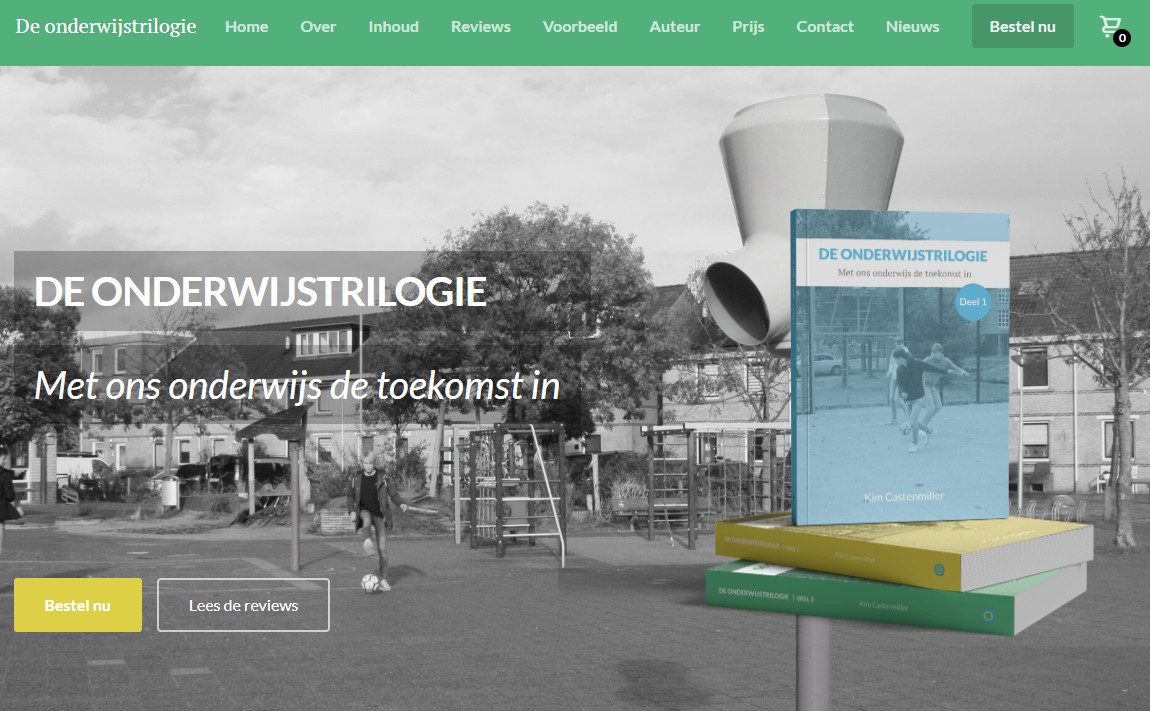
By organisational psychologist and researcher Kim Castenmiller, 2025.